

Are you looking for an extra book to add to your summer reading list? Here are four business and economics books I recommend. Note - none are 2026 releases but all provide great insights that make them worth reading.
The Simple Path to Wealth by JL Collins
In recent years, I have purchased my (now adult) kids exactly one personal finance book to read - this one.
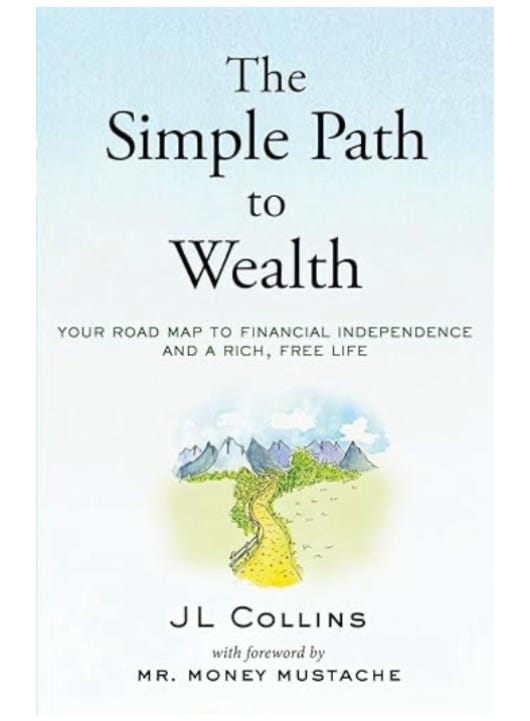
Collins originally wrote The Simple Path to Wealth as letters to his daughter explaining how to build wealth in a simple, practical way. The book’s core message is straightforward: save consistently (and a lot), avoid unnecessary financial complexity, invest in low-cost index funds, and allow compound interest to do its thing.
What makes the book so powerful is its clarity. Collins strips away much of the jargon and focuses on the fundamental idea that financial independence comes from living below your means and investing consistently.
I don’t think you have to save as much as he did to get value from this book. (I definitely don’t save as much as he recommends and I found this book incredibly valuable.)
If you are looking for one book that clearly explains the basics of personal finance and long-term investing, this is a great place to start.
Die with Zero by Bill Perkins
If The Simple Path to Wealth is about getting wealthy, Die with Zero asks a very different question: what is the point of accumulating wealth if you never use it to enjoy your life?
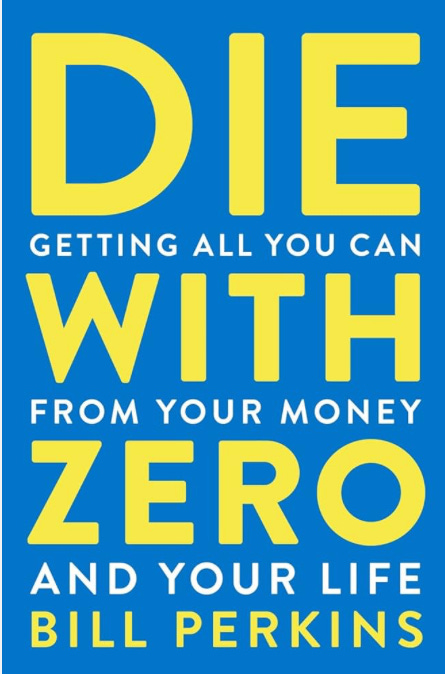
Bill Perkins argues that people often over-save and under-experience life. Instead of trying to maximize the amount of money left at the end of life, Perkins suggests we should try to maximize life experiences — especially during the periods when we are healthy enough to enjoy them.
One of the book’s most interesting ideas is the concept of “memory dividends.” Conventional dividends are monetary payments you receive from your investments. The longer you have an investment, the more dividends you could earn. Memory dividends work in a similar fashion. Experiences — like travel, adventures, or time with family — pay dividends for years through the memories they create. By this logic, a great experience you have in your 30s, 40s, or 50s will be more valuable than a similar experience in your 60s or 70s, as it will pay memory dividends for longer.
Perkins doesn’t argue against saving or investing. Rather, he encourages readers to think carefully about when they spend money and to recognize that some experiences can only happen at certain stages of life.
One part my wife and I have implemented is his adapted “bucket-list” exercise. Perkins recommends you list some experiences you want for each stage of your life. My wife and I turned 50 this summer, so for us it is thinking through the experiences we want between ages 50-55, between 55-60, etc. Certain activities are best experienced when younger and others might be better when older and being intentional in planning has helped us.
This book is a great one to read with The Simple Path to Wealth, as it provides a fascinating counterbalance. One focuses on building financial security through disciplined investing; the other emphasizes using money intentionally to maximize life satisfaction.
Reading them together highlights the tension between saving for the future and living fully in the present.
Abundance by Ezra Klein and Derek Thompson
Abundance explores a central question in modern policy debates: why does it seem so hard to build things in America today?
Klein and Thompson argue that many of the systems meant to protect the public — permitting rules, regulatory processes, and layers of governance — have unintentionally made it harder to build housing, infrastructure, energy projects, and other essential goods.
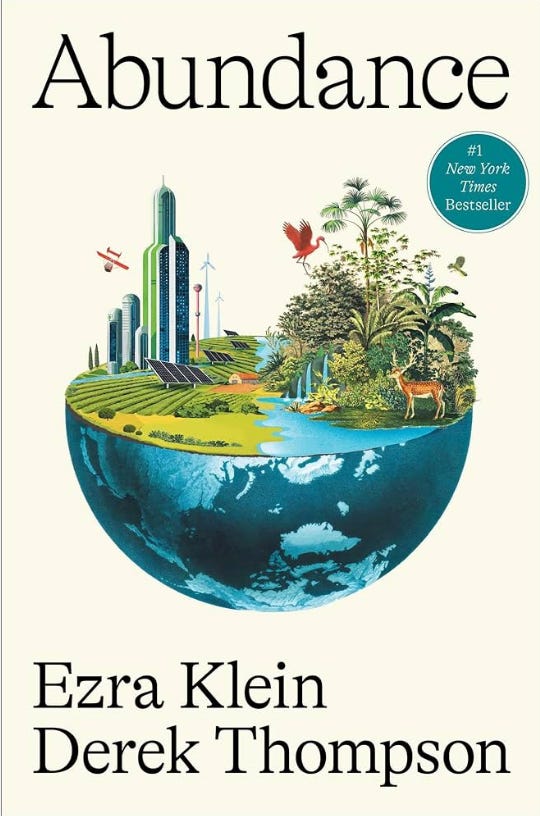
The book’s core argument is that the United States needs to rediscover a mindset of building and problem-solving at scale. If we want affordable housing, better infrastructure, and technological progress, we need policies that make it easier to produce and innovate.
Those who know me will know I tend to lean more to the (political) right on economic issues. But I read a lot from many perspectives and Ezra Klein is, politically, very much on the left. I think this is one of the best economics economics book from a left-leaning perspective, possibly the best, ever. Whether you agree with every argument or not, the book raises important questions about economic growth, government policy, and the trade-offs between regulation and development.
The Triumph of Economic Freedom by Phil Gramm and Donald J. Boudreaux
This book tells one of the most important — and often overlooked — stories in economic history: how dramatically living standards have improved over the past two centuries.
Gramm and Boudreaux document how market economies, technological innovation, and expanding economic freedom have helped lift billions of people out of poverty. They show how growth in productivity and trade has led to longer lifespans, better health, greater access to education, and higher living standards across the globe.
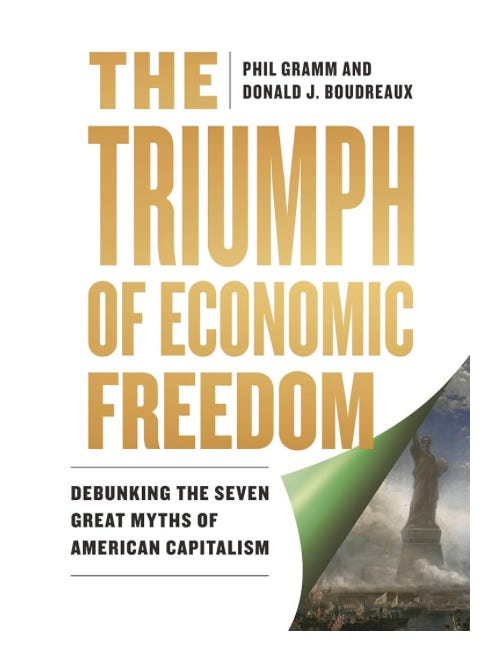
At a time when many public discussions focus on economic problems, this book provides a useful reminder of just how extraordinary modern economic progress has been.
It’s an optimistic and data-driven look at how free markets and economic freedom have contributed to human prosperity.
Final Thoughts
These books highlight something different, two on personal finance/individual decisions and two on government policy
With The Simple Path to Wealth and Die with Zero, you get two different perspectives on how live life, save, and spend.
With Abundance and The Triumph of Economic Freedom you learn how markets have transformed living standards worldwide and how removing regulations supercharge wellbeing and, well, abundance.
Together they provide a fascinating mix of personal finance, public policy, and economic history — perfect for a thoughtful summer reading list.
Thanks for the Gramm and Boudreaux recommendation. I hadn't seen that one and have added it to my list.
I found the premise of Abundance a great read, but the actual writing was a bit repetitive and drawn out. It felt like a long blog post turned into a book.
All good picks. Two comments:
1. Another book I would recommend for building wealth is Dwight Lee and Richard McKenzie, Getting Rich in America: 8 Simple Rules for Building a Fortune and a Satisfying Life. In my review in the Wall Street Journal, I called it "a how-to manual for becoming the millionaire next door."
2. Sometimes the bucket list contradicts the rule about saving. My wife and I didn't travel much in our 50s and early 60s because we focused on sending our daughter to an expensive school from Grade 5 through college. What we didn't plan on was how the stock market would zoom. I told my wife, when we decided to send our daughter to private school in 1995, "You realize that this means we won't travel to Europe or Asia for about 12 to 15 years." It turns out that we could have done Europe or Asia every second year at least.