

It is back-to-school season. Students are returning to classrooms, teachers are preparing lessons, and families are buying notebooks, clothes, laptops, and dorm supplies.
But back-to-school season is not just an educational event. It is also full of economics.
In this post and the accompanying video below, we examine several economic lessons involving education and the back-to-school season.
Watch the Video on YouTube
Concept 1: Even “Free” School Is Not Really Free
Public high school generally does not require students to pay tuition. But that does not mean attending school has no economic cost.
Economists measure costs by considering opportunity cost: the value of the next-best alternative someone gives up when making a choice.
A 16- or 17-year-old who attends school could otherwise be:
Working and earning money
Starting a business
Helping their family
Relaxing or pursuing another activity
Going to school means giving up those alternatives.
The costs become more obvious when a student attends college. Students and their families may pay tuition, fees, and the additional costs of books, supplies, housing, and meals.
But college students also give up the income they could have earned while attending classes.
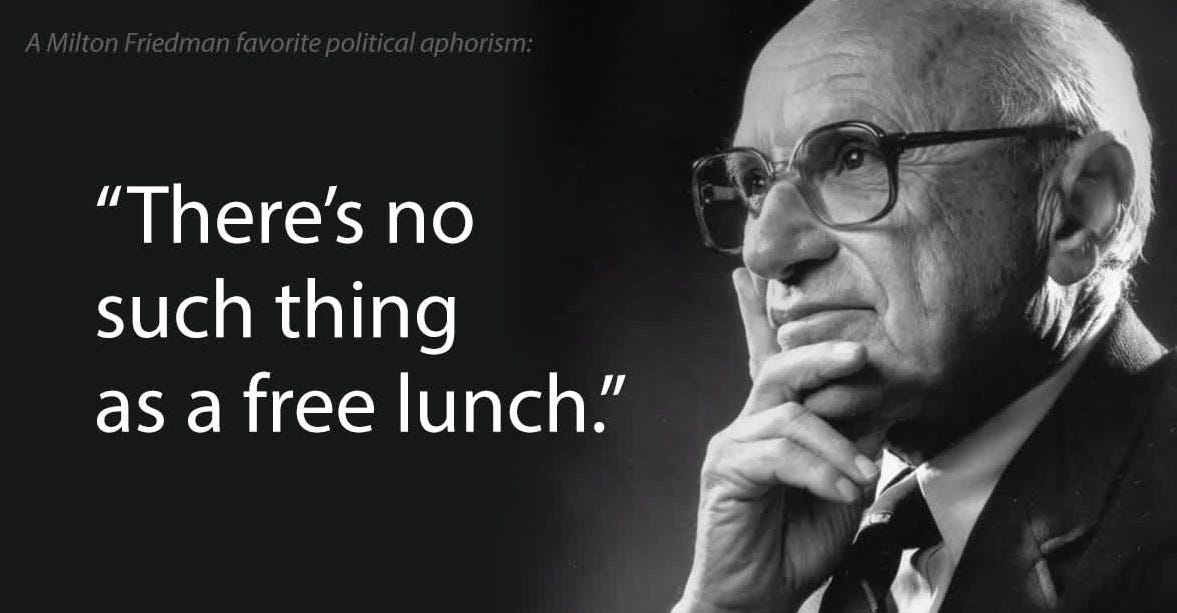
Whether tuition is zero or expensive, as economists like to say, there is no such thing as a free lunch.
Concept 2: More Education Usually Means a Higher Income
If education is costly, why do people pursue it?
There are many potential benefits. Education can help people become more informed citizens, experience personal growth, and better understand the world.
But for many students, the primary motivation is financial: people with more education tend to earn more money.
For example, The Bureau of Labor Statistics estimated median weekly earnings in 2022 of:
$682 for someone who did not finish high school
$853 for a high school graduate
$1,432 for someone with a bachelor’s degree
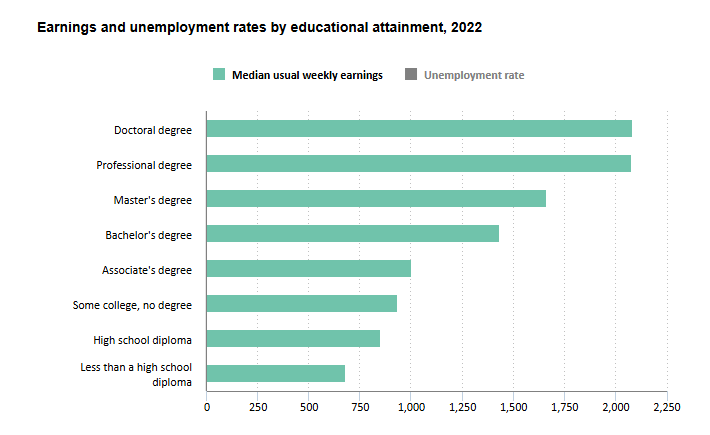
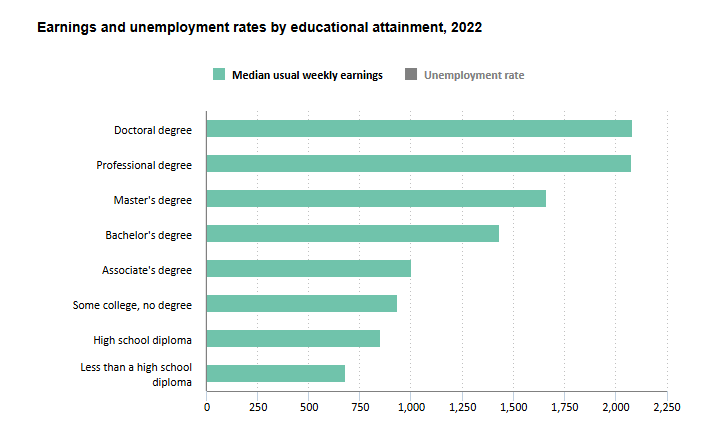
These are averages, and they do not mean that every college graduate earns more than every high school graduate. But the overall relationship is clear: people who complete higher levels of education tend to have higher earnings.
That raises another question: Why does completing more education lead to higher earnings?
Concept 3: Does Education Build Skills? Or Send a Signal?
Economists generally offer two major explanations for the relationship between education and earnings.
The first is that more schooling increases a person’s human capital.
Under this explanation, education helps people develop valuable knowledge and skills. A student might learn a trade, master technical material, improve communication skills, or become better at solving complicated problems.
If schooling makes someone more productive, employers generally would be willing to pay that worker more.
The second explanation is that getting a degree sends a signal that the person would be a great employee.
Completing a degree sends information to an employer. A high school or college graduate has demonstrated an ability to:
Show up consistently
Complete difficult assignments
Meet deadlines
Navigate complicated requirements
Continue working toward a long-term goal
Even if an education does not directly teach a skill used in the workplace, completing the degree may signal that the graduate will be a great worker.
So, do graduates earn more because education makes them more productive, or because a degree signals that they were already likely to become productive workers?
Both.
Schools genuinely teach valuable skills. At the same time, degrees provide credentials that employers can use when deciding whom to hire.
Concept 4: College Is Usually Valuable, But Not for Everyone
The earnings premium makes college look like an obvious investment. College graduates earn more, so everyone should attend college—right?
Not necessarily.
College is often a good investment for students who complete their degrees at a reasonable cost. But advocates sometimes overstate its value by focusing almost entirely on average earnings.
Averages leave out several important complications.
Some Students Start but Do Not Finish
The wage figures comparing high school and college graduates generally focus on people who actually earned their degrees.
But many students begin college and do not graduate.
Those students may still:
Pay tuition
Accumulate debt
Give up years of potential earnings
Leave without receiving the full financial value of a degree


Fewer than 65 percent of students earn a degree within six years of beginning college, according to the completion figure discussed in the video.
For someone who pays for several semesters, gives up time in the workforce, and leaves without a degree, the financial return can be extremely poor.
Among Graduates, Some Still Have a Negative ROI
Some college graduates earn far more than the average. Others earn far less.
The payoff can depend on:
The tuition paid and the amount borrowed
The field of study
The student’s career path
The income the student could have earned without attending
How long completing the degree takes
And more
On average, more education tends to mean higher salaries. But that does not mean college is worth it for everyone.
Final Thought … And Watch the Video
The economics of education is more complicated than simply comparing tuition with a graduate’s future salary.
A college education is incredibly valuable for many people. But the value is not identical for everyone, and the costs include much more than what appears on a tuition bill.
Watch the full video for a closer look at these five economic lessons.