

The NFL is not just America’s most popular sports league. It is also one of the most fascinating businesses in the country.
I just dropped a video looking at four economic lessons from the NFL (you can find it at the end). There are some interesting economic forces at play, and we’ll begin with a discussion of the NFL’s ability to extract enormous TV contracts.

1. In a fragmented media world, the NFL dominates
Thirty or forty years ago, a hit network television show could attract tens of millions of viewers. Today, audiences are scattered across Netflix, YouTube, TikTok, TV, streaming services, and other options.
Very few programs can attract big audiences anymore, except football.
In fact, in 2025, 46 of the 50 most-watched U.S. television broadcasts were NFL games.

That scarcity gives the NFL tremendous bargaining power. If you are a television network or streaming service, there aren’t many substitutes for the NFL.
And when something valuable has very few substitutes, the seller (the NFL) can command a high price.
That helps explain the enormous media contracts the NFL has negotiated with CBS, Fox, NBC, Disney, Amazon, and Netflix.
There are other reasons football works particularly well on television. Check out the video at the end of the post to learn more.
2. If the NFL were one giant corporation, what would it be worth?
Right now, each NFL franchise is owned independently. But imagine there were no independently owned Minnesota Vikings, Kansas City Chiefs, or Philadelphia Eagles. Instead, one company owned all 32 teams. This corporation owned all of the media rights, the league’s intellectual property, its licensing operations, and everything else.
How much would this entity be worth? Let’s investigate.
Forbes estimated the average NFL franchise was worth $7.1 billion in 2025. Simply multiplying that figure by 32 gets you well above $200 billion.
But that may not capture the entire value of the league.
There is value in the individual franchises, but there is also enormous value in the NFL brand, its media rights, its national audience, its international growth potential, and the league structure itself. NFL Incorporated, if it were one entity, would be worth more than most major media companies in the world.
3. The strange economics of cooperating with your competitors
Apple doesn’t hope Samsung succeeds. And Coca-Cola isn’t trying to help Pepsi. The US has laws preventing rival companies from colluding with each other.
But NFL teams are different.
While they are fierce rivals trying to win games on the field, the 32 NFL teams need each other to be competitive. A league where the same handful of teams win every year, while the other teams have virtually no chance, would eventually become less interesting and therefore less valuable.
So NFL teams cooperate in ways that would look very unusual in most industries.
They share massive national TV contracts. They impose a salary cap. Bad teams receive better draft picks. The schedule itself helps weaker teams by giving them an easier schedule.
All of these policies push toward one objective: competitive balance.
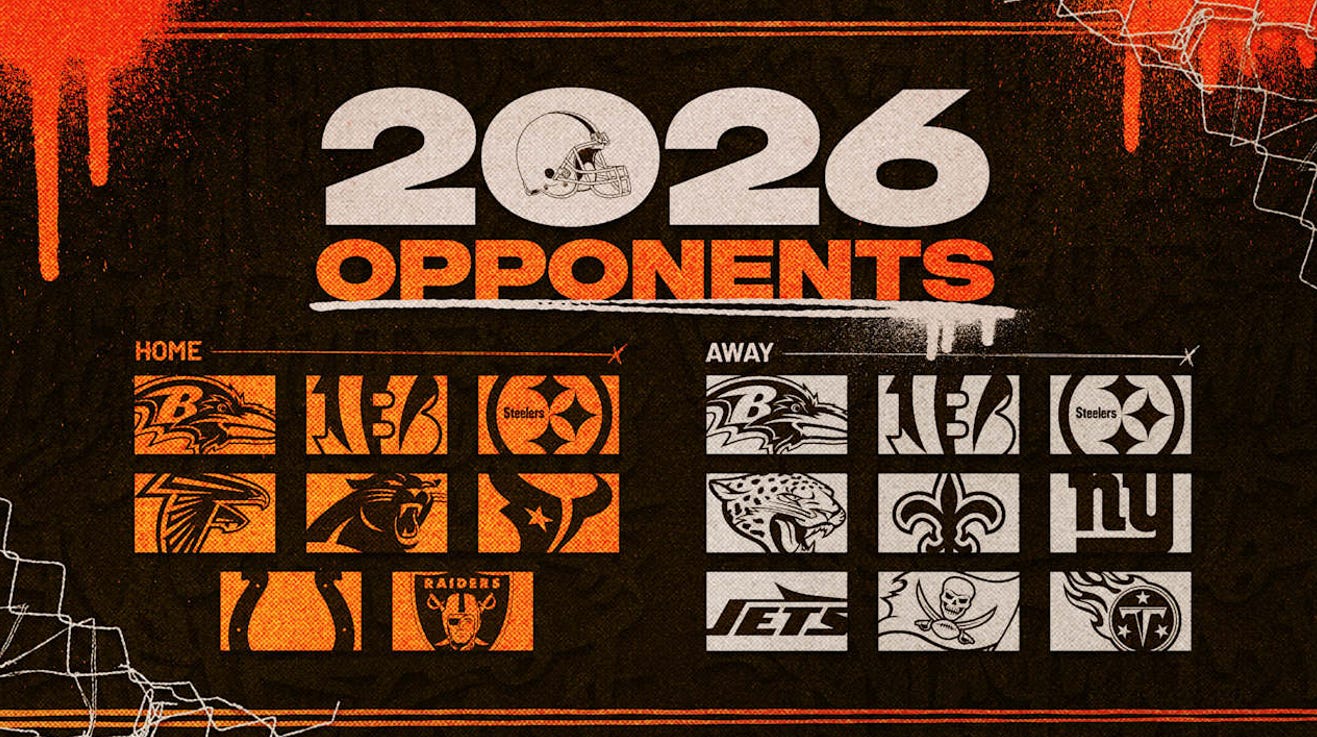
The Browns have one of the easiest schedules in 2026 in large part due to their poor performance in 2025
The NFL’s owners are competitors, but they also understand that the product they are selling is partly the competition itself.
That creates a fascinating tension between competition and cooperation that you don’t see in many other businesses.
4. Why might drafting a Hall of Fame player be a bad decision?
NFL teams have roughly the same amount available to spend under the salary cap, but that money is distributed unevenly across players.
Elite quarterbacks can earn $50 million or $60 million per year. Other positions command dramatically less.
Why?
Economists would think about a player’s marginal value: How much does adding a player increase the team’s chances of winning?
That leads to an interesting draft thought experiment.
Suppose you somehow knew with absolute certainty that a college punter would become the greatest punter in NFL history. Should you select him with the first overall pick? No.

The reason? NFL teams don’t simply try to draft great players. They try to find players whose value exceeds what they need to pay. Given there is a set salary schedule for draft picks, those in higher value positions will be more appealing. Punters? Not as much.
That insight helps explain why quarterbacks are so valuable in the draft and why a player’s rookie contract can be nearly as important as his talent.
I go through that example — and the economics behind it — in more detail in the video.
Closing Thoughts and Video
Economics is everywhere, including in the ways it influences America’s top sports league. For more, check out the video!